|
|---|
Click on the map to see indicators of the respective districts.
| Indicators | Values | |
|---|---|---|
| Number of the overall population at District Level | 279,076 | |
| Number of children 0-18 | 81,174 | |
| Percentage of children 0-18 to the total of the population | 29% | |
| Number of families | 78,485 | |
| Total number of the beneficiaries for the program of education | Number of children attending kindergarten education | no info |
| Number of children attending primary education | 31,265 | |
| Number of children attending secondary education | 9,365 | |
| Total number of the beneficiaries for the program of Economic Aid | Number of families relying on the EA with children aged 0-15 | 5,512 |
| Elements of social exclusion based on "poverty" | Percentage of children aged 6-15 who live in families which rely on the EA | 15.17% |
| Elements of Social Exclusion - Children with Disabilities | Number of children aged 0-18 with Disabilities | 1,581 |
| Percentage of children aged 0-18 with disabilities | 1.90% | |
| * Percentage of children with 1 or both parents unemployed | 6.32% | |
| * Percentage of children who live in houses with inappropriate living conditions | 22.72% | |
| * Percentage of children who don't have access to improved drinking water | 15.27% | |
| * Percentage of children who live without electricity | 9.67% |
| Source of information |
|---|
| * In-depth study, Author A. Ceni and V. Kolpeja. |
| Indicators | Values | |
|---|---|---|
| Number of the overall population at District Level | 31,877 | |
| Number of children 0-18 | 10,985 | |
| Percentage of children 0-18 to the total of the population | 34% | |
| Number of families | 10,183 | |
| Total number of the beneficiaries for the program of education | Number of children attending kindergarten education | 1,089 |
| Number of children attending primary education | 4,691 | |
| Number of children attending secondary education | 1,387 | |
| Total number of the beneficiaries for the program of Economic Aid | Number of families relying on the EA with children aged 0-15 | 1,326 |
| Elements of social exclusion based on "poverty" | Percentage of children aged 6-15 who live in families which rely on the EA | 31.88% |
| Elements of Social Exclusion - Children with Disabilities | Number of children aged 0-18 with Disabilities | 247 |
| Percentage of children aged 0-18 with disabilities | 2.20% | |
| * Percentage of children with 1 or both parents unemployed | 9.21% | |
| * Percentage of children who live in houses with inappropriate living conditions | 24.52% | |
| * Percentage of children who don't have access to improved drinking water | 7.13% | |
| * Percentage of children who live without electricity | 24.48% |
| Source of information |
|---|
| * In-depth study, Author A. Ceni and V. Kolpeja. |
| Indicators | Values | |
|---|---|---|
| Number of the overall population at District Level | 75,521 | |
| Number of children 0-18 | 24,498 | |
| Percentage of children 0-18 to the total of the population | 32% | |
| Number of families | 19,234 | |
| Total number of the beneficiaries for the program of education | Number of children attending kindergarten education | 1,677 |
| Number of children attending primary education | no info | |
| Number of children attending secondary education | 2,599 | |
| Total number of the beneficiaries for the program of Economic Aid | Number of families relying on the EA with children aged 0-15 | 2,657 |
| Elements of social exclusion based on "poverty" | Percentage of children aged 6-15 who live in families which rely on the EA | 20.92% |
| Elements of Social Exclusion - Children with Disabilities | Number of children aged 0-18 with Disabilities | 487 |
| Percentage of children aged 0-18 with disabilities | 2% | |
| * Percentage of children with 1 or both parents unemployed | 9.17% | |
| * Percentage of children who live in houses with inappropriate living conditions | 24.41% | |
| * Percentage of children who don't have access to improved drinking water | 7.10% | |
| * Percentage of children who live without electricity | 24.37% |
| Source of information |
|---|
| * In-depth study, Author A. Ceni and V. Kolpeja. |
| Indicators | Values | |
|---|---|---|
| Number of the overall population at District Level | 37,283 | |
| Number of children 0-18 | 11,730 | |
| Percentage of children 0-18 to the total of the population | 31% | |
| Number of families | 9,650 | |
| Total number of the beneficiaries for the program of education | Number of children attending kindergarten education | 836 |
| Number of children attending primary education | 5,168 | |
| Number of children attending secondary education | 753 | |
| Total number of the beneficiaries for the program of Economic Aid | Number of families relying on the EA with children aged 0-15 | 622 |
| Elements of social exclusion based on "poverty" | Percentage of children aged 6-15 who live in families which rely on the EA | 19.22% |
| Elements of Social Exclusion - Children with Disabilities | Number of children aged 0-18 with Disabilities | 175 |
| Percentage of children aged 0-18 with disabilities | 1.50% | |
| * Percentage of children with 1 or both parents unemployed | 7.34% | |
| * Percentage of children who live in houses with inappropriate living conditions | 26.39% | |
| * Percentage of children who don't have access to improved drinking water | 17.74% | |
| * Percentage of children who live without electricity | 11.44% |
| Source of information |
|---|
| * In-depth study, Author A. Ceni and V. Kolpeja. |
Note:
Information about (1) population and (2) population group ages in National, Regional, District, Municipality and Commune level, - are provided by General Directorate of Civil Registration, Ministry of Interior (year 2010).
Information about: (1) families that are treated with the Economic Aid (EA) and have children (from different group ages), (2) number of families, (3) children of different group age whom leave in families treated with EA, (4) children without parental care, (5) children with different disabilities, - are indicators provided by National Social Service and Social Service Offices in Regional level (year 2012).
Information about the percentage (%) of children leaving with different social issues, are indicators that are calculated by Observatory Office, based on primary information provided by proper national and local institutions.
Information about the budget used in Regional, Municipality and Commune level, - are provided from financial office of each Region (year 2010).
Information about the children that are part of labor market (whom are working), are provided by Labor Regional office, based in each region of the country (year 2012).
Information about the children that frequent the school, - are provided by Regional Education Directories and Local Education Offices (year 2010).
Information about children in conflict with the law, - are provided by General Directory of Prisons, Ministry of Interior (year 2010).
 Info about the region
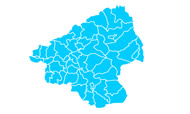 Indicators (commune level)